Humidity in an industrial building
Humidity in the industrial premises must comply with the indicators approved in sanitary norms and rules. Otherwise, problems arise that ultimately lead to financial costs exceeding hundreds of thousands of rubles.
SNiP norms apply to the following industrial premises:
- cold (without heating) and not in need of temperature control – these are semi-storage buildings for temporary use, where there are no permanently working personnel;
- heated (with a temperature in the working area from 8 to 25 degrees Celsius) – equipment is installed in such premises and personnel serving it work, who need working conditions that comply with the law.
Humidity standards for industrial premises

Regulates humidity indicators SanPiN 2.2.4.548-96. According to its requirements, its norms should be:
- 70% – at t air 25C;
- 65% – at t 26C;
- 60% – at t 27S;
- 55% – at t 28C.
Why is it important to observe the mode of saturation of air with moisture in production and warehouse workshops? As mentioned above, breaking the rules leads to unpleasant consequences:
- there are premature costs for the repair of premises and buildings – moisture has a destructive effect on metal, wood, other finishing materials and the supporting structure of industrial premises;
- the costs associated with low-quality products are growing – high humidity provokes the growth of fungal colonies, accelerated damage to the stored goods (fabrics shrink, cereals stick together, metal elements rust, and wood rots and swells) and equipment;
- the number of sick workers at the enterprise is increasing – mold is an inevitable consequence of high humidity and the cause of the development of allergies, asthma and other more dangerous diseases.
What does it take to get rid of moisture?
Question: “How to reduce humidity in an industrial room?” for large industries, it is solved by installing industrial dehumidifiers and centralized air dehumidification systems. Absorbers of excessive air humidity solve the problem, but require significant financial costs to maintain their work.
But how to solve the problem of excessive humidity in small production shops, where industrial ventilation systems are redundant?
Inexpensive and efficient dehumidification for small and medium-sized industries

Solar dehumidification and ventilation is a universal solution and widespread practice in the US and Europe. In 2015, compact equipment for getting rid of high humidity in industrial premises up to 150 square meters appeared in Russia. This is an air solar collector.
When using a solar collector, there are no electricity bills, and the constant presence of supervisory personnel is not required. The solar collector is a safe device that does not emit harmful substances. Also, the device is protected from fire due to power surges. Installation of the structure is quite simple, the owner is able to install the collector on his own, which means that the humidity in the industrial premises is eliminated without outside help.
Choose your Air Solar Collector
-
 AIR SOLAR COLLECTOR SF5-VС705.00 €
-
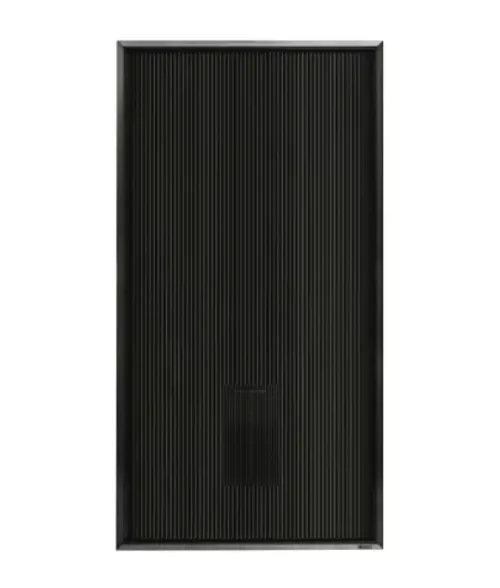 Air Solar Collector SF4-VС587.00 €
-
 Air Solar Collector SF3-VС469.00 €
-
 Air Solar Collector SF2-VС352.00 €